Business process analysis and staff training: making new technology actually work
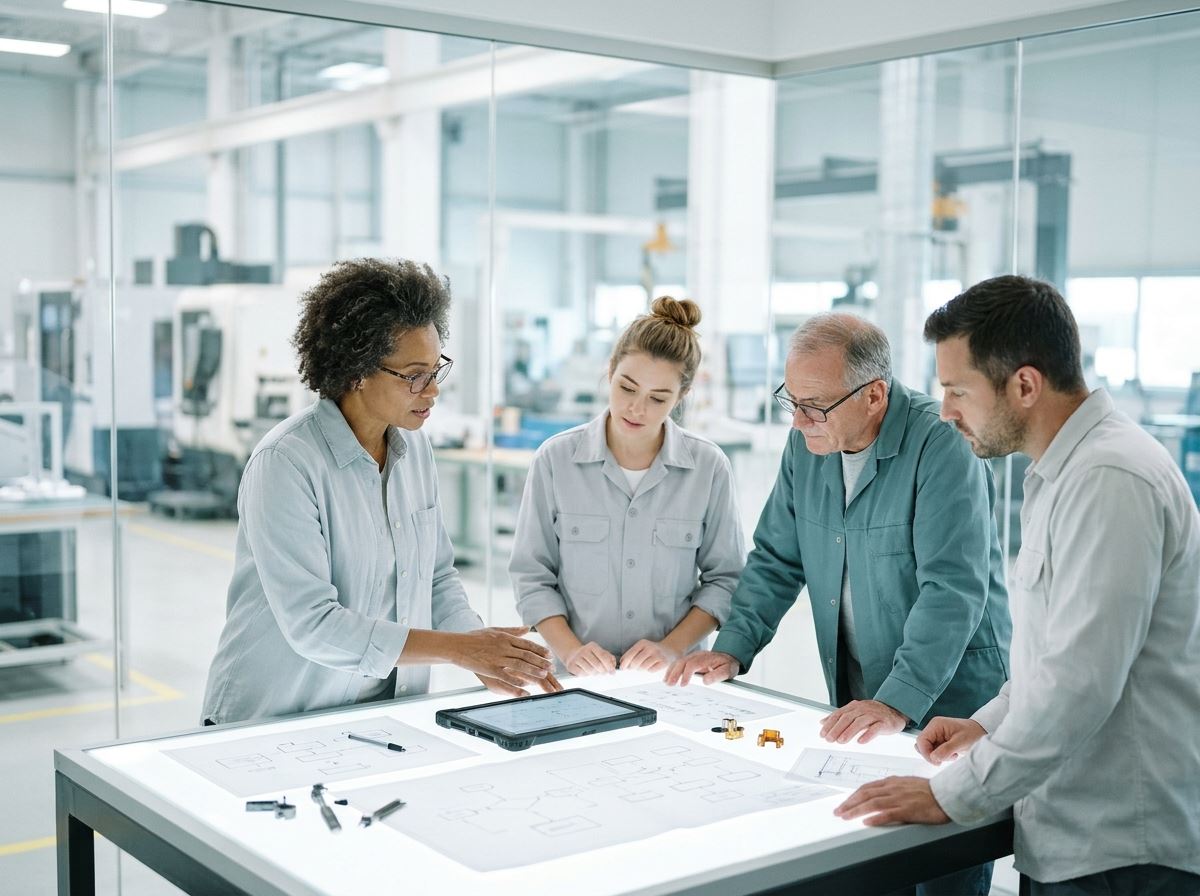
A new system rarely fails because of the code. It fails because it was built for a process that exists only on paper, or because the people who have to use it were never shown how it helps them. Process analysis and staff training are the two steps that prevent this, and they are often the first to be cut from the budget.
At Timeus Lab we study how the work gets done today, show what could be better, and then teach teams to use new tools on their own. This article explains how both parts work and why we treat them as part of every project.
What is business process analysis?
Business process analysis is the study of how work actually moves through a company: who does what, in which order, with which information and tools, and where time, money or quality is lost. The result is a clear picture of the current process and a list of concrete improvements, ranked by effect and effort.
It is not the same as reading the procedure manual. The written process and the real one often differ, and the difference is where most improvements are found.
How do you analyse a process?
A process is analysed by watching it and talking to the people who do it, then checking what you heard against data. Our approach:
- Interviews and observation. We talk to people in every role that touches the process and watch the work where it happens, on the floor, in the office and on the phone. We do not replace this with surveys or chatbots. Real conversations bring out the workarounds people do not think to mention.
- Process map. Each step, hand-off, document and system is drawn, including the spreadsheets and messages that keep things moving.
- Data check. Lead times, error rates, rework and waiting time are measured from existing systems where possible.
- Root causes. For each problem we ask why it happens, until we reach something that can be changed.
- Improvement plan. Each proposal gets an expected effect, a cost and an owner. Some need no software at all.
What does process analysis usually find?
Process analysis usually finds a few repeating patterns. The same data is typed into several systems. Decisions wait for one person who is always busy. Information that exists in one department is invisible to the next. Approvals happen by phone and leave no record. Each of these can be fixed, sometimes with a rule change, sometimes with an integration, sometimes with a custom system or a well-chosen AI tool.
The analysis also shows what should not be automated yet. Automating a broken process only makes it break faster.
Why does staff training decide whether new technology works?
Staff training decides the outcome because a tool that people do not trust or understand will be bypassed. If the system is slower than the old spreadsheet for the person entering data, the spreadsheet will come back. Training shows each role what changes for them, why, and how the new way saves them effort.
This matters even more with AI tools. People need to know what a model is good at, where it makes mistakes, how to check its answers, and which data they may and may not give it.
How do you train staff on new systems and AI tools?
Staff are trained best on their own work, in small groups, close to the moment they start using the tool. What works for us:
- Role-based sessions. An operator, a planner and a manager need different things from the same system.
- Real data and real cases. Exercises use the company's own orders, documents and problems, not generic examples.
- Short sessions, repeated. A first session before launch, then follow-ups after the first weeks of use, when real questions appear.
- Internal champions. One or two people per team get deeper training and become the first point of help.
- Written guides. Short, searchable instructions in the language of the team. We work in five languages.
- Training for AI use. How to ask good questions, check answers, handle confidential data and work with AI agents that suggest actions for a person to approve.
How do you know it worked?
You know it worked when the numbers agreed at the start move and the old workarounds disappear. Typical measures are lead time per order, errors and rework, time spent on manual data entry, and the share of work done in the new system instead of outside it. We agree on these measures before the project starts and review them after launch.
Questions
Do we need process analysis if we already know what software we want?
It still pays off. A short analysis often changes the scope of the software, removes features nobody needs and finds the integration that saves the most time. It also gives you a baseline to measure results against.
Can you train our staff on tools you did not build?
Yes. We train teams on new technology in general, including AI tools, industrial systems and business software from other vendors.
Is training done on site or remotely?
Both. On-site sessions work best for the shop floor and the first launch. Follow-ups and smaller groups often work well remotely.
Who will we be talking to?
Engineers and analysts from Timeus Lab, not a call centre or a bot. The company was founded in 2020 in Spain, has about 30 specialists and works with clients in any country, in five languages.