- Home
- Insights
Insights from Timeus Lab
Practical guides from our engineers on business software, AI in production, sensors and controllers, AI infrastructure, self-hosted language models, process analysis and staff training.
Business software
 Business softwareCustom ERP and CRM development: when it makes sense to build your own systemWhen off-the-shelf ERP and CRM stop fitting, how a custom system is built step by step, what it costs in time and how to avoid the usual mistakes.
Business softwareERP for small and mid-sized manufacturers: what it must do and how to chooseWhat an ERP for a small or mid-sized manufacturer has to cover: quotes, bills of materials, planning, stock, workshop, quality and costs, and how to choose.Business softwareReplacing Excel in operations: when spreadsheets stop working and how to move onSigns that spreadsheets are holding your operations back, what to move first, how to migrate data safely and how to keep people from going back to Excel.Business softwareConnecting a CRM to phone calls and an AI voice assistantHow to connect a CRM to telephony and an AI voice assistant: call logging, transcripts, automatic client and quote creation, privacy rules and common pitfalls.Business softwareModernising legacy business software without stopping the companyHow to modernise old business software step by step: assessing the system, choosing between rewrite and gradual replacement, moving data and keeping the company running.
AI in production
 AI in productionAI in manufacturing: where it pays off and how to bring it into productionPractical uses of AI in production: visual inspection, predictive maintenance, planning and documents. How to choose the first project and avoid pilots that never scale.
AI in productionAI visual quality inspection: how computer vision finds defects on the lineHow AI visual inspection finds defects on production lines: cameras and lighting, training data, accuracy, connecting to the PLC, and when rule-based vision is enough.AI in productionPredictive maintenance: a practical guide for factoriesHow predictive maintenance works: which machines to start with, which sensors and data you need, how models predict failures and how to fit alerts into maintenance work.AI in productionAI document processing: reading invoices, delivery notes and orders automaticallyHow AI reads invoices, delivery notes, orders and specifications, checks them against the ERP and leaves only exceptions for people. Accuracy, privacy and setup.AI in productionProduction planning and scheduling with AI and optimisationHow optimisation and AI build production schedules that respect machines, staff, materials and due dates, and how planners stay in control of the plan.
Sensors and controllers
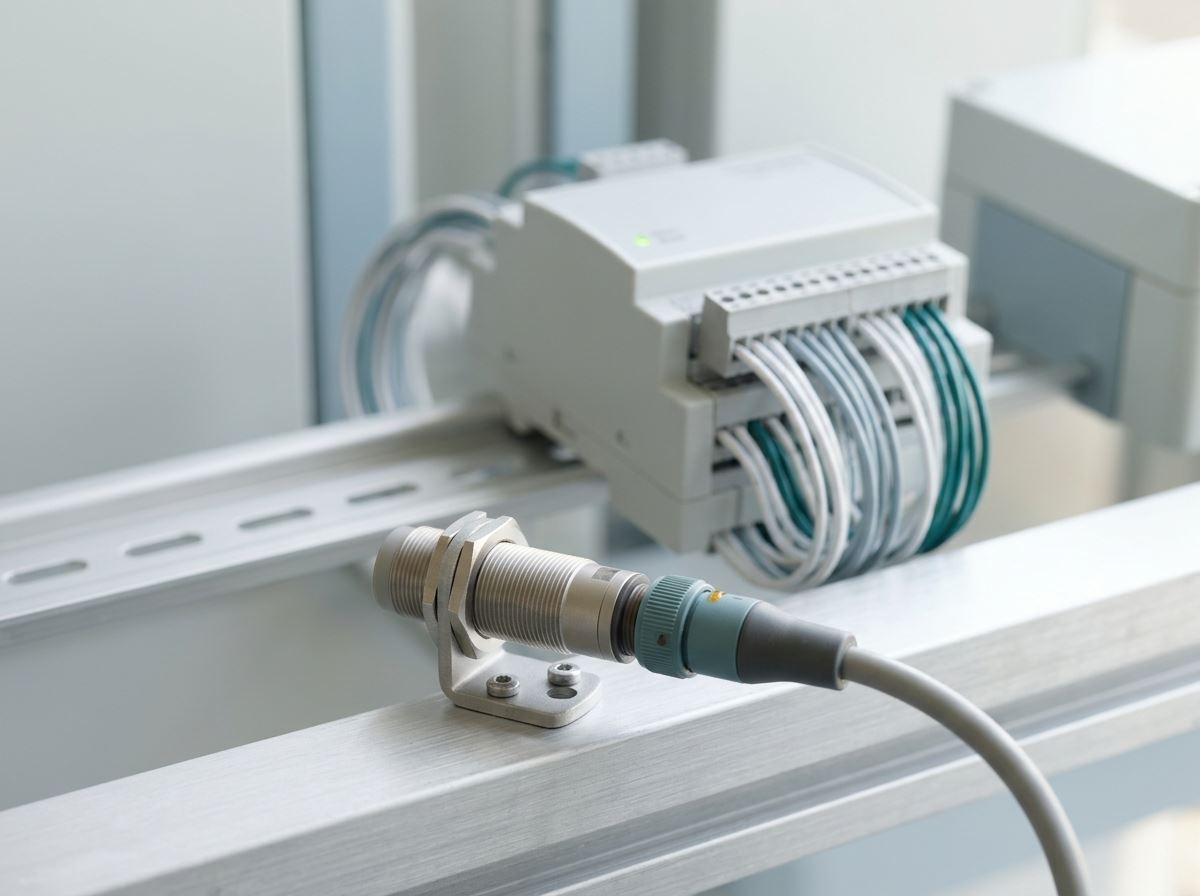 Sensors and controllersPLC and sensor programming: how data gets from the machine to the people who decideHow industrial controller and sensor programming works: PLC languages, Modbus, PROFINET, OPC UA and MQTT, connecting the shop floor to ERP and MES, and security.
Sensors and controllersOPC UA vs MQTT: which protocol to use for industrial dataOPC UA and MQTT compared for industrial data: information models, publish and subscribe, security, Sparkplug, and how plants combine both from PLC to cloud.Sensors and controllersConnecting old machines to IIoT: how to retrofit without replacing equipmentHow to get data from older machines without replacing them: reading existing controllers, protocol gateways, add-on sensors, and what data is worth collecting first.Sensors and controllersSCADA vs MES vs ERP: what each system does and how they fit togetherThe differences between PLC, SCADA, MES and ERP explained simply: what each layer does, which data it owns, how they connect and which one a plant needs first.Sensors and controllersIndustrial cybersecurity basics: protecting controllers and OT networks with IEC 62443Practical OT security for plants: network zones and conduits, remote access, backups of PLC programs, patching limits and how the IEC 62443 standards help.
AI infrastructure
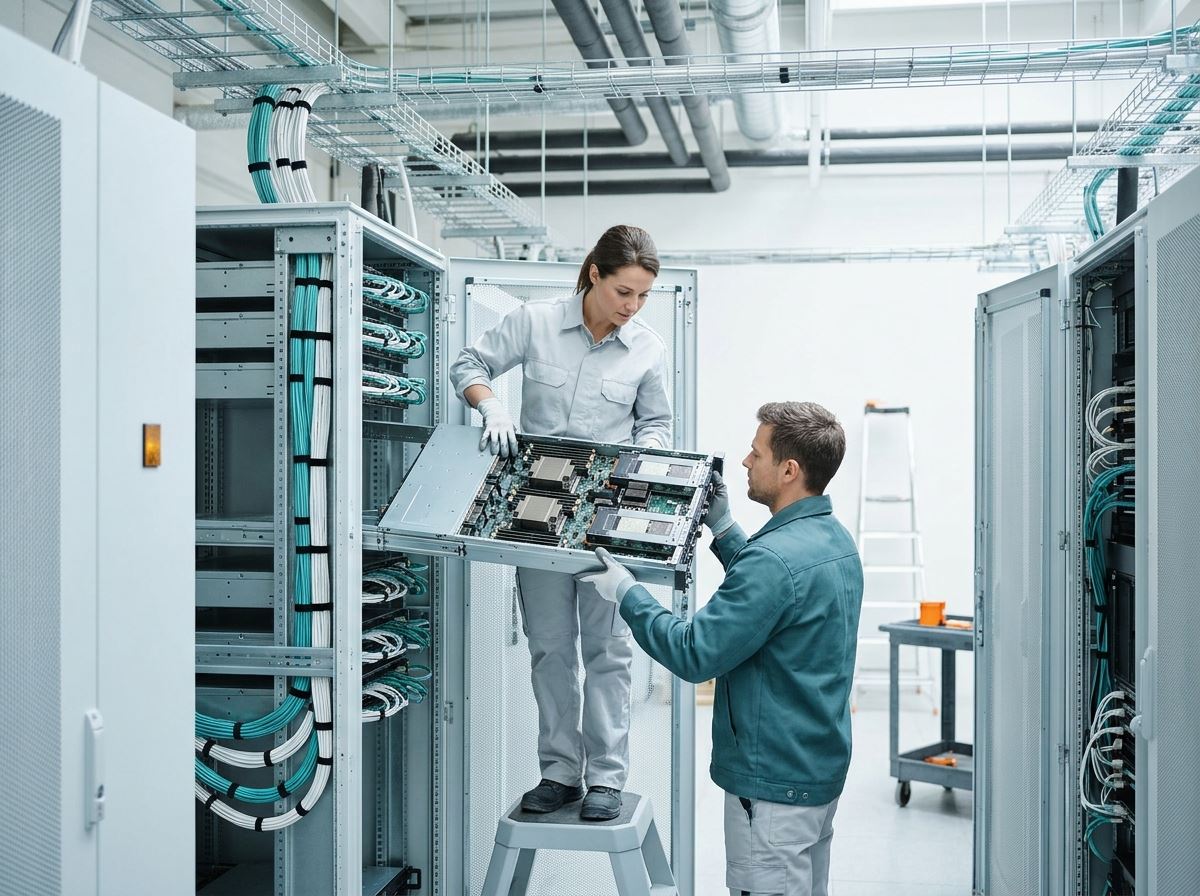 AI infrastructureBuilding an AI server room: power, cooling and GPU serversHow to plan on-premise AI infrastructure: GPU server choice, power per rack, air and liquid cooling, networking, storage and the order of work for a new server room.
AI infrastructureOn-premise vs cloud GPUs: how to compare the real cost of AI computeHow to compare owning GPU servers with renting cloud GPUs: utilisation, power and cooling, staff, lead times, data rules and a simple method to find the break-even point.AI infrastructureLiquid cooling for GPU servers: when air is no longer enoughWhen GPU racks need liquid cooling, how direct-to-chip, rear door and immersion cooling differ, what the room needs and how to plan a move from air to liquid.AI infrastructurePower planning for AI racks: capacity, UPS and redundancyHow to plan electrical power for GPU racks: estimating load, building supply, distribution, UPS and generators, redundancy levels and metering of AI workloads.AI infrastructureEdge AI in the factory: running models next to the machinesWhat edge AI is, when models should run next to machines instead of in a server room or cloud, which hardware is used and how edge devices are managed at scale.
Self-hosted LLMs
Self-hosted LLMsSelf-hosted LLMs for companies: running Mistral, Qwen, Kimi and DeepSeek on your own hardwareHow companies run open language models on their own servers: choosing between Mistral, Qwen, Kimi and DeepSeek, hardware sizing, company data and memory, security.Self-hosted LLMsRAG for company knowledge: how a language model answers from your own documentsHow retrieval-augmented generation lets a language model answer from company documents: indexing, hybrid search, access rights, citations and measuring answer quality.Self-hosted LLMsLLM hardware requirements: how to size GPU memory for a self-hosted modelHow to size GPU memory for a self-hosted LLM: model weights, quantisation, context length, KV cache, number of users, and mixture-of-experts models.Self-hosted LLMsvLLM vs Ollama vs llama.cpp: choosing how to serve a language modelHow vLLM, Ollama and llama.cpp differ for running language models: throughput, many users, hardware support, ease of setup and which one fits production use.Self-hosted LLMsA private AI assistant for your company: keeping data in-house under the GDPRHow to give staff an AI assistant without sending company and personal data outside: self-hosted models, GDPR basics, access rights, logging, and staff rules.
Analysis and training
 Analysis and trainingBusiness process analysis and staff training: making new technology actually workHow process analysis finds what to improve before buying software, and how staff training makes new systems and AI tools stick. Steps, methods and common mistakes.
Analysis and trainingAI training for employees: what staff need to learn and how to teach itHow to train employees to use AI tools well and safely: AI literacy under the EU AI Act, role-based programmes, checking answers, data rules and measuring results.Analysis and trainingA digital transformation roadmap for mid-sized companies and manufacturersHow to build a realistic digital transformation roadmap: start from business problems, rank projects by value and effort, and put data, systems and AI in order.Analysis and trainingProcess mapping methods: from simple flowcharts to BPMN and value stream mapsProcess mapping methods compared: simple flowcharts, swimlanes, BPMN and value stream mapping. When to use each, how to run a mapping session and what to do with the map.Analysis and trainingChange management for new software: how to get people to actually use itHow to get people to adopt a new system: involving users early, clear reasons for change, champions, phased rollout, support in the first weeks and measuring adoption.