Connecting old machines to IIoT: how to retrofit without replacing equipment
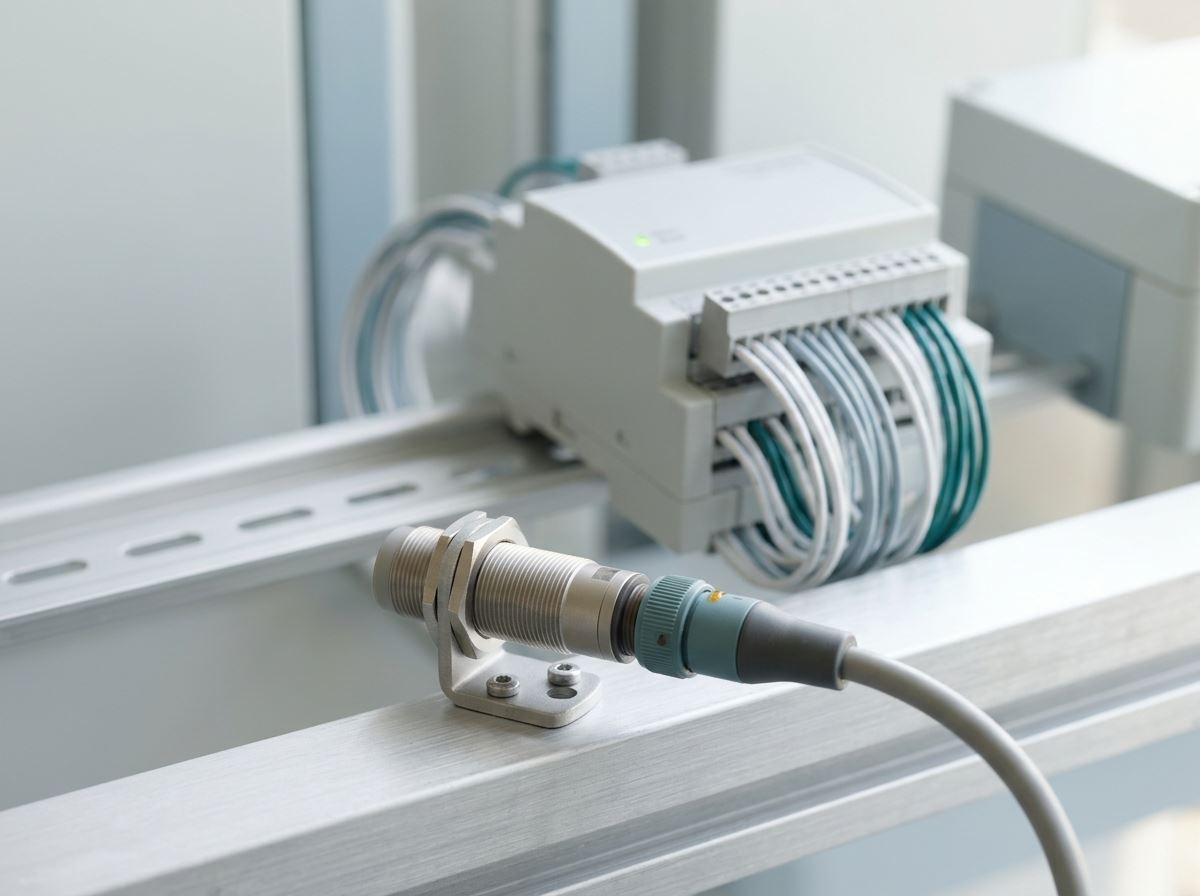
Most plants run machines of many ages. A press from the 1990s may sit next to a new robot cell. The old machine still makes good parts, but it says nothing about what it is doing. Replacing it only for data is rarely worth it. Retrofitting usually is.
At Timeus Lab we connect machines of every age to modern systems. This guide shows the options.
What does retrofitting a machine for IIoT mean?
Retrofitting for IIoT (the Industrial Internet of Things) means adding the ability to collect and send data to an existing machine, without changing how it produces. The machine keeps its control logic. A new layer reads its signals and passes them to the systems above.
What are the options?
There are three main routes, from least to most invasive:
| Route | How it works | Good for |
|---|---|---|
| Read the existing controller | A gateway reads the PLC over its native protocol | Machines with a PLC that has a network port |
| Tap existing signals | Read lamps, relays or analog outputs with an I/O module | Machines with relay logic or closed controllers |
| Add sensors | Fit current clamps, vibration, temperature or counters | Machines with no usable signals at all |
Often a mix is used: the controller provides counts and states, added sensors provide condition data for predictive maintenance.
What should you collect first?
Collect first the data that answers the questions managers already ask:
- is the machine running, stopped or in fault;
- how many good and bad parts it made;
- why it stopped, with a reason chosen by the operator if needed;
- which order it is working on.
These four give availability, performance and quality, the basis of OEE (overall equipment effectiveness), and they connect production to the ERP.
How do you avoid disturbing production?
Production is protected by reading, not writing, by testing on a spare or idle machine first, and by installing during planned stops. Gateways connect through separate network ports where possible, and nothing is changed in safety circuits.
How does the data reach business systems?
Gateways usually publish data over MQTT or offer it through OPC UA, as explained in OPC UA vs MQTT. A central server stores the history, and dashboards, the MES and the ERP read from there.
Questions
What if we do not have the PLC program or password?
Signals can still be read from outputs and added sensors. We also help recover or document old programs where possible.
Is wireless reliable enough?
For monitoring data, often yes. For anything that controls the machine, use wired connections.
How many machines can we connect at once?
Start with a few to test the approach, then roll out in groups. The design is the same for ten or a hundred machines.