AI visual quality inspection: how computer vision finds defects on the line
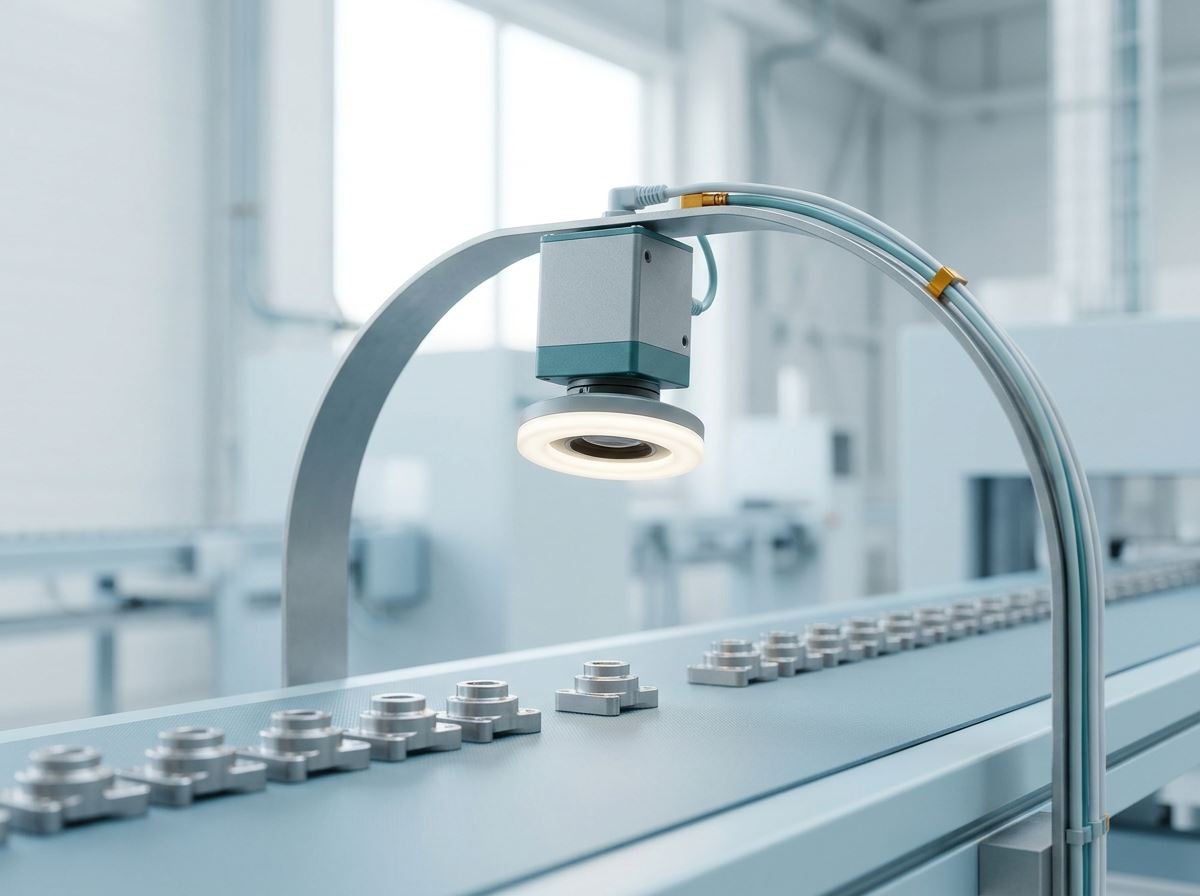
Human inspectors are good at spotting unusual defects, but nobody can look at thousands of identical parts per shift without missing some. Computer vision does not get tired. Combined with good lighting and the right integration, it can check every part and leave people to handle the doubtful cases.
At Timeus Lab we build vision systems that work on real lines. This guide explains what is involved.
What is AI visual inspection?
AI visual inspection uses cameras and trained models to decide whether a part, surface or package is good or defective. Unlike classic machine vision, which checks fixed rules such as "this edge must be here", an AI model learns from examples, so it can handle natural variation in materials, textures and positions.
When is rule-based vision enough?
Rule-based vision is enough when the check is geometric and the parts are consistent: measuring a dimension, reading a code, checking that a component is present. It is fast, predictable and easy to validate. AI is better for defects that vary in shape and look, such as scratches, dents, stains, porosity or wrong textures. Many systems use both.
What hardware does it need?
Most of the success of a vision system is decided before any model is trained, by the camera, the optics and especially the lighting.
| Part | What to decide |
|---|---|
| Camera | Resolution for the smallest defect, area or line scan, frame rate |
| Optics | Field of view, working distance, depth of focus |
| Lighting | Ring, dome, backlight or low angle, chosen to make the defect visible |
| Trigger | A sensor or PLC signal that fires the camera at the right moment |
| Computer | An edge computer with a GPU near the line for fast results |
| Reject | A pusher, gate or signal to stop or mark the part |
How much data is needed to train a model?
Training data depends on the task. For many defects, a few hundred good images and some dozens of examples per defect type are enough to start, and the model improves as the line produces more. Some methods learn only from good parts and flag anything unusual, which helps when defects are rare.
The images must come from the real line, with the real lighting and the real variation of parts.
How is it connected to the line?
The vision system is connected through the line's controller: the PLC triggers the image, the system returns a result within the cycle time, and the PLC rejects or passes the part. Results and images are also stored, so quality engineers can see trends and the model can be retrained. This is where controller programming and vision meet.
How do you measure accuracy?
Accuracy is measured with two numbers: how many bad parts are missed, and how many good parts are wrongly rejected. Both have a cost, and the balance is set with the quality team. A test set of labelled parts, kept apart from training, is used to check every new model version before it goes to the line.
Questions
Can AI inspection replace our inspectors?
It usually takes over routine checking. Inspectors review the cases the model is unsure about and handle new types of defects.
What happens when we change the product?
The model needs examples of the new product. With a good data pipeline this takes days, not months.
Is it worth it for a small line?
It can be, if defects are costly or inspection takes much time. A first project on one line shows the gain before wider rollout.